Standing on the Shoulders of Giants: A Conversation with the Pioneers of MIGS

I built this session because I wanted us to hear the stories behind the breakthroughs that changed our specialty. We learn the techniques, study the publications, and teach the next generation. But how often do we get to sit with the surgeons who made those advances possible and ask what it actually took? Standing on the Shoulders of Giants brings Leila Adamyan, Javier Magrina, Liselotte Mettler, Camran Nezhat, and Harry Reich together for that conversation. It’s an opportunity I am particularly excited to share with you in Boston.
Imagine performing a laparoscopic hysterectomy before there was an established roadmap for doing one. Building the case for operating from a video monitor when that approach was still unfamiliar. Taking a robotic platform into complex pelvic surgery while its place in gynecology was still being defined. These are the experiences behind the procedures we now teach without a second thought. Hearing how they unfolded, from the surgeons who lived them, promises a very different kind of learning.
Dr. Leila Adamyan has advanced minimally invasive gynecologic surgery in Russia and internationally, bringing together research, operative innovation, and surgical education. Her work in endometriosis, Müllerian anomalies and reproductive surgery has shaped how we think about the relationship between disease and the extent of surgery required to treat it — a question with real stakes for fertility and function. She has also organized numerous international congresses that brought surgeons from different countries together to exchange operative experiences. I want to ask her how surgical ideas actually travel across borders, and what it takes to sustain that kind of collaboration for decades.
Dr. Javier Magrina helped bring robotics into gynecologic surgery during its earliest clinical development. Beginning in 2003 at Mayo Clinic, he and his team built robotic techniques on the Zeus system and later the da Vinci platform, working across advanced laparoscopy, gynecologic oncology, and complex pelvic surgery. His contribution was as much about evaluation as invention — pushing past the promise of a new device to the harder questions of which operations were actually feasible, what complications showed up, and how outcomes compared. With surgical technology still moving fast, I’m curious how an early adopter weighs possibility against uncertainty, and what he’d tell a surgeon facing that same choice today.
Dr. Liselotte “Lilo” Mettler carried operative endoscopy from its pioneering years into surgical practice worldwide. Working alongside Kurt Semm at the University of Kiel, and later directing the Kiel School of Gynecological Endoscopy, she built a career spanning hysterectomy, myomectomy, fertility-preserving surgery, and endometriosis — backed by extensive publications and international teaching. Through surgical courses, atlases, and mentorship, she helped surgeons take techniques home to their own patients long before video conferencing made that kind of teaching easy. I’m looking forward to asking her what made that early operative laparoscopy work worth defending, and what the teaching side of this field owes to her.
Dr. Harry Reich performed the world’s first laparoscopic hysterectomy in 1988, publishing the report the following year — a milestone that opened the path to an operation now performed daily on women throughout the world. His work reached well beyond hysterectomy. He began laparoscopic excision of endometriosis around 1978 and went on to advance laparoscopic treatment of deep pelvic disease, including cul-de-sac endometriosis requiring rectal resection, as well as pelvic lymphadenectomy for cancer. The chance to ask him about the judgment, preparation, and persistence behind those steps is precisely why I wanted this conversation in our program.
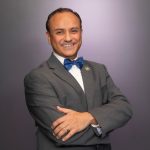
Moderated by Dr. Assia Stepanian, founder of SurgeryU, this candid exchange will give us a window into the barriers these surgeons faced, the lessons they took from setbacks, and the advice they’d offer someone with an idea worth pursuing today.
Every surgeon who has worked to introduce a new technique, build a training program, or improve care within an institution knows that progress takes more than a good idea. This session is a chance to hear what actually moved these pioneers’ ideas forward, and to think about what we can carry into our own work. Please join me in Boston. I expect this to be a conversation we remember for years to come.