Spotlight On: Robotics


This month, we cast a spotlight on articles, SurgeryU videos, and Journal of Minimally Invasive Gynecology (JMIG) article recommendations from the AAGL Robotics (SIG) led by Chair Uchenna Acholonu, Jr, MD, MBA, FACOG, FACS.
Access to SurgeryU and JMIG are two of the many benefits included in AAGL membership. The SurgeryU library features high-definition surgical videos by experts from around the world. JMIG presents cutting-edge, peer-reviewed research, clinical opinions, and case report articles by the brightest minds in gynecologic surgery.
SurgeryU video and JMIG article recommendations by our SIGs are accessible by AAGL members only. For full access to SurgeryU, JMIG, CME programming, and member-only discounts on meetings, join AAGL today!

SIG Recommended SurgeryU Video #1:
Robotic-Assisted Resection of Disseminated Peritoneal Leiomyomatosis
By Bruce Lee, MD, and Emory Salom, MD
This video covers background, presentation, and management of a rare condition. The clear, high-quality video shows many important basics of robotic surgical technique including tissue manipulation, cold and energy-based dissection, and suturing. The narration is clear and informative, and the short-form duration makes it easy for busy surgeons.
 Click Image to View Video
SIG Recommended SurgeryU Video #2:
Surgical Tips for Robotic Transabdominal Cerclage Placement
By Brittany Roberts, MD, Viviana De Assis, DO, Emad Mikhail, MD, FACOG, FACS
This video offers a practical surgical guide to robotic transabdominal cerclage placement for the management of cervical insufficiency. The authors review key technical variations including tunneling with Mersilene tape versus passage of Mersilene tape on a blunted needle, providing nuanced guidance for the complex benign gynecologic surgeon. As SMFM’s 2023 guidelines (reaffirmed 2025) recommend offering transabdominal cerclage to patients with a prior transvaginal cerclage—whether history- or ultrasound-indicated—who subsequently experienced spontaneous singleton delivery before 28 weeks, this video is particularly timely. Optimal care of patients with cervical insufficiency requires close collaboration between minimally invasive gynecologic surgeons and our maternal-fetal medicine colleagues, and this video serves as an excellent resource to support that multidisciplinary approach.
SIG Recommended SurgeryU Video #3:
Safety and Efficiency in the Laparoscopic Hysterectomy
By Jacob Lauer, MD, MPH, Jin Hee Kim, MD, Arnold Advincula, MD
This video provides a clear and elegant demonstration of techniques to optimize the surgical approach to laparoscopic hysterectomy. While performed with robotic-assisted laparoscopy, the principles presented are equally applicable to traditional laparoscopy, making this a valuable resource for all minimally invasive gynecologic surgeons. Though the content may appear foundational, these steps are essential to every hysterectomy—and the video’s strength lies in the straightforward, concise manner in which they are presented. A well-organized summary slide of key points reinforces the core teaching. This is an excellent resource for trainees and experienced surgeons alike who wish to refine and standardize their approach to one of the most commonly performed gynecologic procedures.
Jeffrey J. Woo, MD
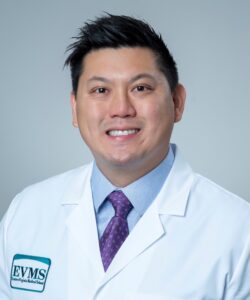
Dr. Jeffrey J. Woo serves as the Editor-in-Chief of AAGL’s SurgeryU, is a minimally invasive gynecological surgeon, and Associate Professor of Obstetrics and Gynecology at Eastern Virginia Medical School.

JMIG Article Recommendation #1:
Determinants and Safety of Same-Day Discharge After Robotic Hysterectomy: A Systematic Review and Meta-Analysis
Kyrillos Mahrous Gerges, MBBCh(c), Gregg K, Nelson, MD, PhD, FRCSC, Fernando Heredia, MD, Mohamed Abdelfattah Elgazzar, MBBCh, MSc, Baraa Muthanna Ali, MBChB, Ahmed Eldesouky, MBBCh(c), Arwi Omar Kara, MBBCh, Hudi Mohammed, MBChB, Alzahraa Faris Alesawy, MBBS, Amira Sakr, MBCHB, MSc, MRCPI, MRCOG
This article is noteworthy because it provides more evidence supporting the safety of same-day discharge after robotic hysterectomy, while identifying patient selection and operative factors that influence discharge success. It is particularly valuable for gynecologic surgeons and programs optimizing ERAS pathways, as it shifts the focus toward risk stratification and perioperative efficiency rather than default admission, helping guide safe expansion of outpatient robotic surgery.
JMIG Article Recommendation #2:
Cross Sectional Survey of Ob/Gyn Residents’ Graduated Experience With Robotic Surgery
Alexandra E. Snyder, MD, Lauren E. Farmer, MD, Morgan L. Cheeks, MD, Erin J. Caraher, MD, Jasmine Correa, MD, Natalia S. Parra, MD, Julia J. Wainger, MD, Ayesha I. Yakubu, MDSamantha D. Buery-Joyner, MD
This is worth sharing because it addresses a real training problem: residents’ satisfaction with robotic training was tied to meaningful participation. The authors found that 76% of PGY3/4 respondents reported console participation for some or all major robotic cases, but barriers included time constraints, case complexity, lack of first assists, and attending comfort. It is highly discussable for a gynecologic surgery audience because it gives a practical framework for how MIGS faculty and departments can structure graduated robotic autonomy
JMIG Articles Recommendations By:
Connie Cheng, MD
Phillip Connell, MD
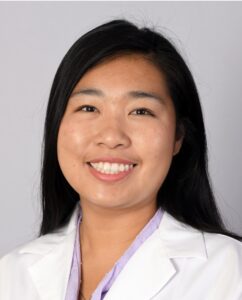
Dr. Cheng is a Fellow in Complex Benign Gynecology and practices at North Shore University Hospital, Northwell Health.

Dr. Connell is a Fellow in Complex Benign Gynecology and practices at North Shore University Hospital, Northwell Health.

Robotically Assisted Laparoscopic Myomectomy for a Type 5-6 Giant Fibroid
We present a challenging case of a robotically assisted laparoscopic myomectomy performed for a type 5-6 intramural/subserosal fibroid measuring approximately 20 cm arising from the left lateral uterus. Notably, the uterus itself and right adnexa were normal in size and appearance, underscoring the asymmetric and deceptive nature of large broad ligament-type fibroids and the anatomic distortion they can impose on surrounding structures.
Several features of the robotic platform were instrumental to the success of this case. Utilization of all four robotic arms enabled precise traction and counter-traction, which proved critical during dissection and identification of vital structures including the uterine vasculature and ureters—structures easily displaced and obscured by a mass of this size. The ability to toggle the 30-degree robotic laparoscope optimized visualization within an unusually compact operative field, a challenge inherent to cases where a large mass leaves limited working space. Finally, the articulating EndoWrist instruments provided the finesse and dexterity needed to dissect safely within tight anatomic corridors that would have been difficult to navigate with conventional straight-stick laparoscopy.
This case illustrates how the robotic platform’s unique capabilities can be leveraged to safely perform advanced myomectomy in the setting of giant fibroids with significant anatomic distortion.
About the Authors:
Jeffrey J. Woo, MD
Dr. Jeffrey J. Woo serves as the Editor-in-Chief of AAGL’s SurgeryU, is a minimally invasive gynecological surgeon, and Associate Professor of Obstetrics and Gynecology at Eastern Virginia Medical School.

Autonomous Surgical Robots
A student asked if I believe surgery will be taken over by robots. The question brought back a childhood memory. At the northern tip of Manhattan sits a toll bridge into the Bronx. My father would hand the toll booth attendant a quarter before driving beneath the raised barrier. Today, that process is completely automated – no more attendants. Could this be the future of surgery?
The role of AI in preoperative planning deserves its own discussion. Instead, consider the technical steps of a hysterectomy. We identify critical anatomy, distinguish tissue planes, seal and divide vascular pedicles and supporting ligaments, remove the specimen, and close the vaginal cuff. To us, these are nuanced decisions informed by anatomy, judgment, and experience. But they are also a sequence of discrete tasks.
If the idea of a robot performing these steps autonomously seems implausible, consider the pace of technological progress. BostonDynamics has a fleet of robots that combine extraordinary dexterity, advanced computer vision, and immense computational power to perform complex manufacturing tasks with speed and precision. Earlier this year, a humanoid robot ran the Beijing Half-Marathon, demonstrating a level of mobility that seemed unimaginable only a few years ago. More striking for surgeons, researchers at Johns Hopkins University developed the Hierarchical Surgical Robot Transformer (SRT-H), an experimental, autonomous system trained on surgical videos, that adapts to patient-specific anatomy in real time. Built on a transformer architecture similar to that used by ChatGPT, it can respond to spoken instructions—”grasp the left fallopian tube and place it on tension”—while incorporating that feedback into future performance.
Do I believe surgery will be taken over by robots? In the words of poet John Donne, “Ask not for whom the bell tolls…” Perhaps the better question is, how will we define the surgeon’s role once robots do take over.
References
1. Ji Woong (Brian) Kim et al., SRT-H: A hierarchical framework for autonomous surgery via language-conditioned imitation learning.Sci. Robot.10,eadt5254(2025).DOI:10.1126/scirobotics.adt5254
About the Author:
Uchenna Acholonu, Jr, MD, MBA, FACOG, FACS
Dr. Acholonu is Chair of the AAGL Robotics SIG and Program Director of the CBG Fellowship at Northwell Health.